Roofing Contractor in Wildwood, MO

Wildwood Is Missouri's Largest City by Land Area. Its Tree Canopy Creates Roofing Problems That Most Contractors Never Think to Look For

What the Forest Above Your Roofline Is Doing to It Right Now

Wildwood covers 67 square miles of rolling Missouri terrain under mature oak and maple canopy. That wooded character creates a roofing challenge no competing contractor addresses directly. Overhanging branches deposit organic debris into valleys continuously. North and west-facing slopes under dense canopy stay damp between rain events. Damp surfaces under persistent shade favor moss and algae that degrade shingle granule coatings. Every Wildwood contractor applies the same inspection approach used on open suburban lots. Properties with significant canopy overhead require something more specific.


C&D handles every Wildwood inspection with the tree canopy conditions of that property accounted for. We assess valley debris, evaluate shade exposure by slope, and specify algae-resistant coatings as the baseline on shaded surfaces. Insurance claims are handled at no cost with a written commitment at exactly the carrier's approved figure. Our Ballwin office at 14532 Manchester Road is under 10 miles from central Wildwood. Call (314) 862-2342.

Two Decades of West St. Louis County Work Including Wildwood's Wooded Properties

C&D General Contracting's 20-plus years in West St. Louis County includes regular work on Wildwood's heavily wooded properties. Persistent shade effects on north-facing slope shingles and the flashing failures that debris accumulation produces are documented conditions we have seen across multiple seasons on actual Wildwood projects. The 4.4-star Google rating across 63 reviews and BBB Accreditation since May 2021 reflect that history.

Roofing Problems Wildwood, MO Homeowners Face That Suburban Markets Don't

Debris Accumulation in Valleys and What It Does Over Time

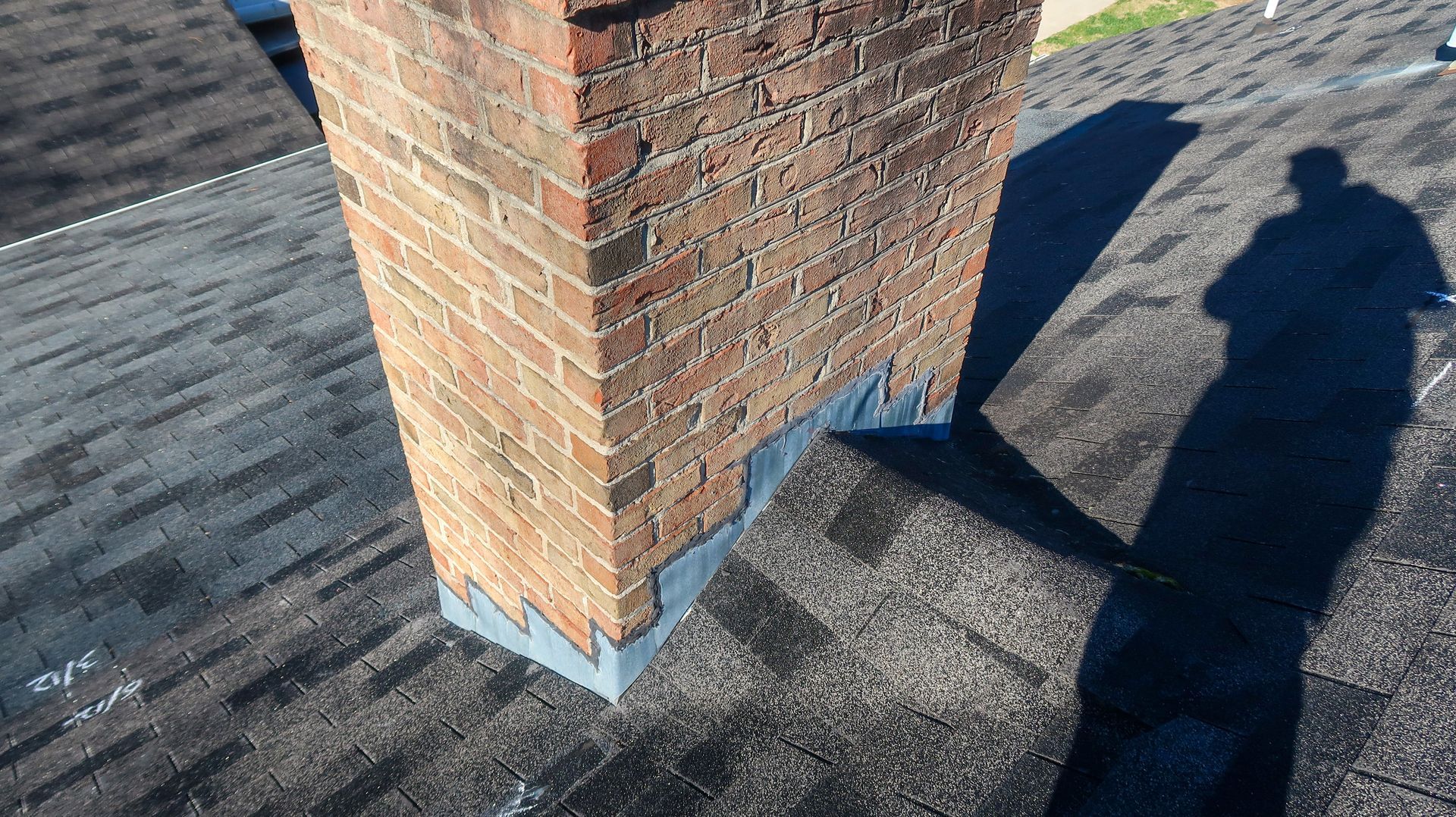
Leaves and twigs that collect in Wildwood roof valleys compact, retain moisture, and decompose against the valley flashing surface. The decomposition degrades sealant materials and accelerates metal oxidation at flashing edges. Compacted debris forces water to dwell against flashing intersections longer than designed. The resulting flashing failures are frequently mistaken for shingle failures because the water entry point and the interior stain can be several feet apart.


Moss and Algae on Shaded Wildwood Rooflines

Biological growth on roof surfaces is not a cosmetic concern. Moss roots penetrate granule coatings and lift shingle edges away from the deck. Algae retains moisture against granule coatings, accelerating the release that reduces UV protection. Both flourish on shaded Wildwood slopes where canopy extends drying time and limits UV exposure. Standard asphalt shingles without algae-resistant coatings show biological growth on shaded Wildwood slopes within a few years of installation.


Branch Impact Damage That Looks Minor From the Ground

Wind events in Wildwood's wooded terrain bring branches into contact with roof surfaces at frequencies open suburban lots never experience. A branch sliding across shingles displaces granules along a linear track rather than a discrete impact point, producing the appearance of general wear. Larger impacts at penetrations or ridge sections can crack deck boards or displace flashing without an immediate interior leak. These conditions accumulate across multiple storm seasons and require professional inspection from on the roof.


Signs That a Wildwood Roof Needs Attention Before Problems Become Costly

What Shade and Debris Do to a Wildwood Roofline Over Time

On a Wildwood property with significant canopy, warning signs differ from what suburban homeowners look for. Dark streaking down a slope is algae establishing on the shingle surface. Green or gray mossing along north-facing shingle joints is biological growth actively working at the shingle edge. Visible debris in valleys and at flashing transitions means moisture retention is already underway. These conditions progress slowly and require a contractor who evaluates shaded and debris-exposed surfaces as distinct categories.

Hail Season Indicators on Wildwood Properties

After any St. Louis County hail event, Wildwood homeowners face an inspection challenge open-lot properties do not. Debris from surrounding trees can obscure granule displacement patterns needed for insurance documentation. A professional inspection clears the debris picture and documents what the hail produced on each slope. Dented aluminum gutters or downspout sections confirm hail energy reached the property at a level warranting a rooftop inspection.

Post-Storm Branch and Debris Signs Worth Acting On Immediately

A branch resting on the roof surface after a wind event is not evidence of no damage. It may have traveled along the roofline displacing granules along its path, or struck at a penetration point and displaced flashing. Any visible branch contact after a storm warrants a professional inspection before the next rain event. Debris-filled valleys or blocked downspout entries following heavy rainfall also indicate compromised water management during the event.

How C&D General Contracting Approaches Every Wildwood, MO Project

  • Step 1: Free Inspection That Accounts for Wildwood's Canopy Conditions

    Every Wildwood engagement begins with a free inspection that assesses canopy coverage over each slope before examining the roof surface. North and west-facing slopes under heavy shade get specific attention for biological growth, granule condition under persistent moisture, and edge lifting at shingle joints. Valleys on wooded lots are examined for debris accumulation and evaluated for the compaction stage indicating moisture retention. All findings are documented in a written report delivered before any cost discussion begins.

  • Step 2: Insurance Claims Filed and Managed at No Cost

    When inspection findings support an insurance claim, C&D files on the homeowner's behalf, submits the documentation package to the carrier, and attends the adjuster inspection to ensure every damage item is captured before the approved scope is finalized. The written price commitment fixing the project at the carrier's approved figure is produced before the crew is scheduled. That commitment holds. Nothing is added to the approved scope after the adjuster visit.


  • Step 3: Material Specification for Wooded Wildwood Properties

    Algae-resistant coatings are specified as default on shaded Wildwood slopes. Class 4 impact-resistant shingles are discussed where branch contact frequency makes the impact rating relevant beyond standard hail protection. Standing seam metal is presented for homeowners on heavily wooded lots seeking a system that canopy conditions cannot degrade through the same mechanisms that affect asphalt.


  • Step 4: Installation, Cleanup, and County Permit Closeout

    Full tear-off with deck assessment on every section. Debris cleared from all valleys before new valley material is installed. Ice and water protection at eaves and all penetrations. Synthetic underlayment across the full deck. Every flashing replaced or restored. Roofing material installed to manufacturer requirements. Magnetic sweep across all landscaped areas at completion. C&D pulls the required St. Louis County building permit before work starts, manages the inspection, and provides permit closeout documentation at project completion.


Free Roof Inspection for Ballwin, MO Homeowners. Call (314) 862-2342. No Obligation

Roofing Materials That Make Sense on Wildwood, MO's Wooded Properties

When to Repair and When to Replace on a Wildwood, MO Property

The Specific Repair Scenarios That Make Sense on Wooded Wildwood Lots

Isolated flashing failures on a system with substantial remaining shingle life are the most appropriate repair targets. A separated pipe boot collar, a step flashing section lifted after Missouri freeze-thaw cycling, or a discrete branch impact on an otherwise sound system are cases where targeted repair extends reliable life without justifying full replacement. C&D documents the scope, provides the cost in writing, and completes the repair without recommending replacement the property does not require.


When Canopy Conditions and System Age Together Indicate Replacement

A Wildwood roofing system under significant canopy for 15 or more years without algae-resistant specification and without regular professional inspection has likely accumulated biological growth, granule loss, and debris-related valley deterioration across multiple slopes. Addressing individual failing areas on a broadly degraded system produces a patchwork result. Missouri's building code requires full replacement when repair scope exceeds 25 percent of total roof surface area, a threshold frequently relevant on older Wildwood properties.

Missouri's Climate and How Wildwood's Canopy Amplifies Its Effects


What Shade Does to Missouri's Seasonal Climate Impact on Wildwood Rooflines

Missouri's hail, heat loading, and freeze-thaw cycling affect roofing systems across St. Louis County. On Wildwood's shaded lots those conditions produce additional effects. North-facing shingles under canopy remain damp for days after rain events that dry open surfaces in hours. That prolonged moisture creates favorable conditions for biological growth. Debris in canopied valleys retains moisture between rain events and compounds the freeze-thaw damage to valley flashings that Missouri winters produce.

Spring Hail and Summer Storms Across Wildwood's Rolling Terrain

Wildwood's position at the western edge of St. Louis County, where the terrain begins transitioning toward Missouri's Ozark foothills, creates localized weather variation within the city. Properties on exposed hillside positions can experience significantly more intense wind loading during the same regional storm than valley-floor properties a quarter mile away. St. Louis County's annual hail exposure reaches Wildwood consistently, and post-storm assessment that accounts for each property's topographic position produces more accurate findings than regional generalizations.

Winter Freeze-Thaw Effects on Debris-Loaded Wildwood Valleys

Missouri winters cycle above and below freezing repeatedly rather than holding steady cold. On Wildwood properties where valley debris has compacted against flashing surfaces, those moisture-laden masses undergo repeated freeze-thaw cycles through winter. Each cycle produces mechanical stress at sealant joints. Over multiple winters this produces the flashing separation at valley edges that Wildwood homeowners frequently attribute to shingle failure. Removing valley debris before winter is the single most effective preventive maintenance these properties can perform.

Understanding Wildwood, MO's Residential Properties

Wildwood's Older Communities: Glencoe, Pond, and the Historic Western Areas

Wildwood incorporated in 1995 from existing communities, and the western areas around Glencoe, Pond, and Allenton carry residential properties from the 1950s through 1970s. These homes on large wooded lots through multiple ownership cycles carry roofing histories that are difficult to trace. Properties without professional inspection in recent memory may carry systems with complicated repair histories overlaid by decades of canopy influence.

Highway 109 Corridor and Wildwood's 1990s Development Boom

The subdivisions along Highway 109 through central Wildwood in the 1990s and early 2000s represent the city's primary growth era. Homes along Strecker Road and near Wildwood Town Center carry roofing systems now entering or passing the professional assessment window. Many were built with standard asphalt specifications that made no accommodation for the shade conditions the landscaping would develop over two decades.

Remote Western Wildwood and the Meramec River Corridor Properties

The westernmost areas of Wildwood toward the Meramec River corridor carry the city's most distinctive residential character. Large rural-residential properties on steep wooded terrain, unconventional roofline configurations, and the combined effects of canopy and wind exposure from the rolling topography require thoughtful assessment. The combination of wooded lot conditions and terrain exposure to regional storm systems produces roofing considerations that no standardized suburban inspection approach addresses adequately.

A Recent Roofing Project in Wildwood, MO

What 20 Years Under a Canopy Did to a Highway 109 Corridor Home

In autumn 2022 a homeowner off Strecker Road in central Wildwood contacted us after discovering water staining on a second-floor ceiling. The property had mature oak canopy over the north and west slopes. Inspection found moss along shingle joints on both shaded slopes, granule displacement from branch contact on the west-facing slope, debris compacted two inches deep in the main valley, and complete valley flashing failure at the lower end where debris had retained moisture against the metal edge for multiple Missouri winters.

From Debris Removal Through Algae-Resistant Installation

Hail impact on the south-facing slope supported an insurance claim covering the full replacement. We filed the claim, attended the adjuster inspection, and produced the written price commitment before scheduling. Tear-off included complete valley debris excavation. GAF Timberline HDZ with algae-resistant coating on all slopes. Zinc ridge strips along the north-facing peak inhibit future moss establishment. Two days to complete. St. Louis County permit issued before work started and closed at completion. The homeowner's payment was their deductible.

Why Wildwood, MO Homeowners Choose C&D General Contracting

The Written Price Guarantee Backed Across Every Insurance Project

Wildwood Roofing and Construction markets adjuster advocacy. Best Choice Roofing offers lifetime warranties and financing. Neither provides a written commitment that the project will be completed at exactly the carrier's approved amount. C&D produces that commitment on every insurance project before the crew is scheduled. It has been honored without exception across more than 15 years of West St. Louis County insurance work.

Tree Canopy Expertise That Competing Contractors Don't Bring to Wildwood

Accurate damage documentation on a Wildwood wooded lot requires a different inspection approach than open suburban properties. We assess shade coverage by slope, evaluate valley debris as a distinct condition rather than a cosmetic observation, and specify algae-resistant coatings based on slope-specific shade duration. No competing Wildwood contractor publishes this methodology. Two decades of working in these conditions has shown us what ignoring them produces.

Verifiable Credentials and a Permanent West St. Louis County Address

BBB Accreditation since May 2021 is at bbb.org. GAF Certified status and System Plus Limited Warranty eligibility is at gaf.com. Google rating of 4.4 stars across 63 reviews reflects actual project performance. General liability insurance certificate is provided before any Wildwood property visit.

What Roof Replacement Costs in Wildwood, MO

Cost Ranges Across Wildwood's Varied Property Types

Single-story ranch homes in the older Glencoe and Pond communities typically run $8,500 to $14,000 for standard replacement with sound deck conditions. Larger two-story homes from the 1990s subdivisions along Highway 109 and Strecker Road typically run $13,000 to $22,000 depending on measured area and slope count. Remote western Wildwood properties with larger footprints or complex rooflines run $18,000 to $35,000 or more. Standing seam metal on Wildwood residential properties runs $20,000 to $45,000 depending on property size.

Wildwood Permits, Insurance Claims, and What to Expect on Costs

Every Wildwood roof replacement requires a St. Louis County building permit. C&D handles all permit paperwork and closeout documentation as part of every project. Permit fees run roughly $200 to $400 based on project scope. For insurance-covered claims, C&D manages the full process at no charge and the homeowner's only cost is their deductible. The written price commitment ensures the carrier's approved figure is the project amount with nothing added.

What Experienced Roofers Look for on Wildwood, MO Wooded Properties

Valley Debris Assessment: The Most Overlooked Inspection Step on Wooded Lots

Wildwood valley inspection adds a dimension beyond standard suburban practice: debris accumulation state. A Stage 1 valley has fresh leaf litter that clears in the next strong rain. Stage 2 has compacted organic material retaining moisture. Stage 3 has saturated debris with visible sealant degradation at flashing edges and may be producing active moisture ingress. These three conditions warrant different responses and different documentation for insurance purposes. A contractor who does not assess valley debris state is missing one of the most consequential indicators on a Wildwood wooded property.


Attic Ventilation on Wildwood Properties Under Heavy Canopy

On Wildwood properties under heavy canopy, attic ventilation balance matters beyond standard suburban considerations. Inadequate ventilation extends the period of elevated humidity in the attic space, promoting biological activity at the deck surface below. We assess each accessible attic section for current ventilation balance and for moisture evidence that indicates the system is not managing the humidity conditions the canopy creates overhead.


Deck Assessment After Canopy-Related Moisture Events

On Wildwood properties where valley debris has produced localized moisture contact against the deck for multiple seasons, deck board condition at those contact points requires specific attention during tear-off. Soft or stained boards indicating prolonged moisture exposure must be addressed before new material is applied. We photograph every deck condition finding, contact the homeowner before any additional scope beyond what the pre-project inspection identified, and provide a revised written scope before any deck repair proceeds.


How Long Does a Roof Last on a Wildwood, MO Wooded Property?

Realistic Lifespan Under Canopy Conditions

Standard asphalt shingles without algae-resistant coatings on a shaded Wildwood slope can show biological degradation within three to five years. With algae-resistant specification, Missouri's climate can deliver a 20-to-25-year service life on Wildwood's shaded slopes comparable to open suburban properties. Class 4 rated products extend the impact-related service life on slopes with branch contact exposure. Annual valley debris clearing extends valley flashing life significantly.

Metal Roofing Lifespan on Wildwood's Canopy-Covered Properties

Standing seam metal delivers 40 to 50-plus years on a Wildwood property regardless of canopy conditions. Biological growth and debris abrasion on granule surfaces, the mechanisms tree canopy accelerates on asphalt, do not operate on metal panels. Branch contact that leaves impact marks on asphalt slides off metal panels without meaningful damage. For Wildwood homeowners who have been through one asphalt cycle and are evaluating whether their canopy conditions justify a different approach, metal changes the maintenance equation entirely.

Ask About Algae-Resistant and Metal Options for Your Wooded Wildwood Property. Call (314) 862-2342

Quick Answers for Wildwood, MO Homeowners

  • Why does tree canopy matter for roofing on Wildwood properties?

    Tree canopy extends drying time on shaded slopes, promotes moss and algae that degrades shingle coatings, causes branch impact that displaces granules, and deposits debris in valleys that retains moisture against flashing surfaces across Missouri winters. These conditions require specific material specifications and inspection practices that standard suburban assessments do not address.


  • What is algae-resistant shingle coating and does my Wildwood home need it?

    Algae-resistant coatings incorporate copper or zinc granules that inhibit biological growth, built into the shingle at manufacture rather than applied as a treatment. On shaded Wildwood slopes they are the appropriate baseline specification. Without them, shaded slopes develop growth that shortens reliable service life.


  • How do I get a building permit for roof replacement in Wildwood, MO?

    Wildwood roof replacements are permitted through St. Louis County's building department. Homeowners do not need to handle this themselves. C&D General Contracting files the permit application before work starts, coordinates the required county inspection, and delivers the permit closeout documentation at project completion as a standard part of every Wildwood project.


  • How long does roof replacement take in Wildwood, MO?

    Single-story Wildwood homes with straightforward rooflines typically complete in one to two days. Larger two-story 1990s subdivision homes run two to three days. Remote western Wildwood properties with steeper pitches or complex configurations run two to four days. Valley debris excavation is accounted for in the written proposal.


  • Does my Wildwood roof qualify for an insurance claim after a hail event?

    Hail damage on a Wildwood property requires professional inspection to document because debris from overhanging trees can obscure granule displacement patterns on the shingle surface. C&D provides free post-storm inspections, clears debris to assess the underlying shingle condition, and documents the findings in a format organized for insurance carrier submission. Whether the documented damage supports a claim is determined by what the inspection actually finds on the roof, not by the storm's regional news coverage.


Frequently Asked Questions: Roofing Contractor in Wildwood, MO

  • How does moss and algae damage a roof on a Wildwood wooded property?

    Moss roots penetrate granule layers and lift shingle edges away from the deck as the organism grows, creating gaps that allow wind-driven moisture entry. Algae deposits a surface layer that retains moisture against granule coatings, accelerating granule release and reducing UV protection. Both develop gradually on shaded Wildwood slopes and are well established before becoming visible from the ground. Professional inspection every three to five years identifies these conditions while proactive material changes can still address them.


  • Does C&D General Contracting serve all of Wildwood's 67 square miles?

    Yes. C&D serves all of Wildwood from the older Glencoe and Pond area communities in the west through the Highway 109 corridor subdivisions in central Wildwood to the remote properties near the Meramec River corridor in the south. The same free inspection, written proposal, tree-canopy-specific assessment approach, and written price commitment apply at every location within Wildwood's boundaries. Distance within the city does not affect service or pricing.


  • What separates C&D General Contracting from Wildwood Roofing and Construction?

    Wildwood Roofing and Construction markets adjuster advocacy. C&D does not advocate for higher settlements. We commit in writing to completing the approved scope at exactly the carrier's approved figure. Our inspection process accounts for tree canopy conditions as a documented methodology rather than a general claim of local knowledge. The written price commitment is the specific differentiator to ask every contractor for before authorizing storm damage work.


  • How does branch contact during Missouri wind events damage a Wildwood roof?

    Branches contacting roof surfaces during wind events produce impact damage ranging from minor granule displacement along a linear slide path to cracked deck boards near penetrations. The linear granule displacement from branch slides is frequently misidentified as general wear because it lacks the circular pattern of hail impact. This matters because branch contact damage has different carrier treatment than hail damage. Accurate identification ensures the documentation reflects what actually occurred.


  • Should Wildwood homeowners inspect their roofs differently than suburban homeowners?

    Ground-level warning indicators differ on Wildwood wooded properties. Beyond standard signs like curling shingles, look for dark biological streaking on shaded slopes, green or gray mossing along lower shingle edges on north-facing sections, and visible debris in valleys or at downspout entries. Any of these visible from the ground indicates canopy-related degradation underway and warrants a professional inspection.


  • How does C&D handle insurance claims on Wildwood properties differently from other contractors?

    Two differences. C&D clears debris from shingle surfaces before documenting granule displacement, ensuring the damage record reflects what the storm produced. C&D also commits in writing before any work is authorized that the project will be completed at exactly the carrier-approved amount. Neither Wildwood Roofing and Construction nor Best Choice Roofing publishes an equivalent written commitment.


  • Do gutters and downspouts get damaged by the same hail that damages a Wildwood roof?

    Yes, and on Wildwood properties gutters often show hail damage more visibly than the roof because tree debris can partially mask granule displacement on shingle surfaces. Dented aluminum gutters from the same event that damaged the roof are typically included in the same insurance claim scope. C&D documents all exterior damage from a single storm in a unified submission.


  • What maintenance does a Wildwood homeowner with a heavily wooded lot need to do between inspections?

    Valley debris clearing after fall foliage season is the highest-impact maintenance practice on wooded Wildwood properties. Removing compacted debris before Missouri's winter freeze-thaw cycles act on it prevents accelerated flashing degradation. Gutters should be cleared at the same time. Branches within three feet of the roofline surface should be identified for trimming. A professional inspection every three to four years catches developing biological growth and flashing conditions before they advance to costly repair territory.


  • Is C&D General Contracting equipped to handle larger Wildwood estate properties in remote western areas?

    Yes. Remote western Wildwood properties including rural-residential lots near the Meramec River corridor and unconventional roofline configurations on steep wooded terrain are within our regular service area. The inspection methodology accounts for the specific combination of canopy conditions, terrain exposure, and roofline complexity. The written proposal and price commitment are identical regardless of which part of Wildwood the property is in.


  • How does standing seam metal perform on Wildwood properties under heavy canopy?

    Metal has no granule surface for debris to abrade or biological growth to establish on. Branch contact that scars asphalt shingles slides off metal panels without meaningful damage. Service life runs 40 to 50-plus years in Missouri's climate regardless of canopy conditions overhead. For Wildwood homeowners on heavily canopied lots making a long-term roofing decision, metal's immunity to canopy-related degradation extends the value argument well beyond general longevity.


Roofing Services in Wildwood, MO

Book Your Free Wildwood,, MO Roof Inspection Today. Call (314) 862-2342 or Visit canddgc.com

C&D general contracting logo for Ballwin, MO

Book Your Free Roof Inspection in Wildwood, MO

What the Inspection Covers on Wildwood's Wooded Properties

Every Wildwood inspection starts with a canopy assessment before touching the roof. Shade coverage over each slope is noted, valley debris accumulation is staged, and biological growth is documented by slope. The standard hail impact, granule, flashing, ridge cap, and attic assessments follow. The written report reflects all of this before any proposal number is discussed.

GET YOUR FREE INSPECTION

The Contractor Who Knows What Wildwood's Trees Do to a Roof

C&D General Contracting serves Wildwood from 14532 Manchester Road in Ballwin, less than 10 miles along the Manchester Road corridor from central Wildwood. We know what two decades under a Missouri oak canopy does to a roofline. We specify algae-resistant coatings because shaded Wildwood slopes actually need them. We back every insurance project with a written price commitment. GAF Certified. BBB Accredited since 2021. 4.4 stars across 63 Google reviews. Call (314) 862-2342 or schedule at canddgc.com.

CALL (314) 862-2342