Why Your Chesterfield Home Needs Urgent Roof Repair After Hail Damage
Why Your Chesterfield Home Needs Urgent Roof Repair After Hail Damage
Living in Chesterfield, Missouri, offers a unique blend of suburban tranquility and access to the vibrant culture of the St. Louis metropolitan area. From the sprawling paths of Faust Park to the quiet, tree-lined streets of established neighborhoods, residents take immense pride in their homes. However, being a homeowner in the Midwest comes with a specific set of seasonal anxieties. As the heat of spring and summer settles into the Missouri River valley, the atmosphere becomes a playground for volatile weather patterns.
While local news often focuses on the dramatic flair of a tornado warning, it is the more common occurrence of hailstorms that causes the most consistent financial and structural damage to Chesterfield properties. The sound of ice hitting an asphalt roof is unmistakable, yet many homeowners breathe a sigh of relief once the storm passes and the windows remain intact. This sense of relief is often misplaced. Hail damage is rarely an immediate catastrophe; instead, it is a "silent destroyer" that initiates a slow-motion failure of your home’s primary defense system.
The Invisible Threat: Why "Looking Fine" Isn't Enough
The most dangerous misconception regarding [roof repair in Chesterfield, MO], is that damage must be visible from the driveway to be significant. After a severe cell passes through West County, a homeowner might walk their perimeter and see that the siding looks clean, the gutters are still hanging, and no shingles are littering the lawn. They assume their home escaped unscathed.
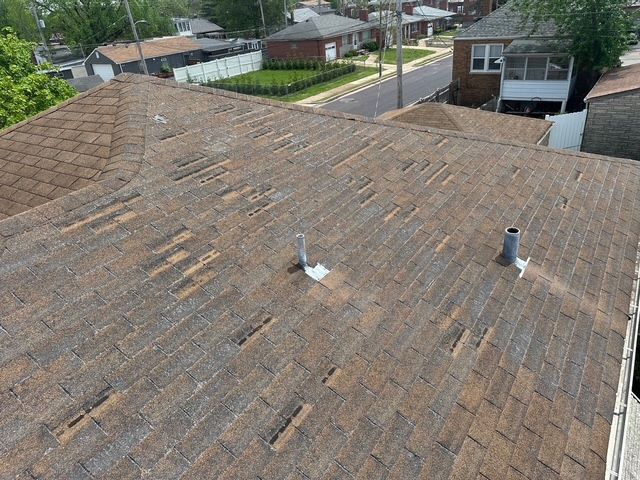
In reality, functional hail damage is almost impossible to detect from the ground. To understand why, you have to look at the microscopic level of a roofing system. Asphalt shingles are not merely waterproof "tiles." They are complex, layered components engineered to shed water and reflect solar radiation. When a hailstone, even one as small as a quarter, strikes a shingle at high velocity, it creates a "bruise." This impact doesn't necessarily break the shingle in half; rather, it crushes the internal structure and dislodges the protective ceramic granules that give the shingle its color and UV resistance.
Once those granules are gone, the underlying bitumen (asphalt) is exposed to the harsh Missouri sun. Without its protective coating, the asphalt begins to "bake," becoming brittle and cracking within weeks. This creates a direct pathway for moisture to reach the wooden decking of your home. By the time you notice a brown spot on your living room ceiling, the structural wood underneath your shingles may have been rotting for months.
The Anatomy of a Hail Strike: Breaking Down Shingle Failure
To appreciate the urgency of a professional inspection, one must understand the three-part anatomy of a standard architectural shingle and how hail compromises each layer:
- The Ceramic Granule Surface: This is your roof’s first line of defense. These granules are designed to take the brunt of weather and, more importantly, to block UV rays. Hail acts like a hammer, scouring these granules away and leaving "bald spots."
- The Asphalt Layer: This is the waterproofing agent. When exposed to the sun due to granule loss, it undergoes a process called "volatilization," where the essential oils in the asphalt evaporate. This leads to shrinking and cracking.
- The Fiberglass Mat: This is the structural "skeleton" of the shingle. A heavy hail hit can actually fracture this mat. While the shingle might look okay on the surface, its structural integrity is gone, meaning it can no longer withstand high winds or heavy rain without tearing.
In Chesterfield, where summer temperatures frequently soar into the 90s, this degradation process is accelerated. A roof that survived a May hailstorm might be completely compromised by August due to the intense thermal expansion and contraction caused by the heat.
The Costly Domino Effect of Delayed Maintenance
The primary reason to seek immediate roof repair in Chesterfield, MO, isn't just to fix a few shingles: it is to prevent a total home restoration project. When a hail strike is ignored, a predictable and destructive domino effect begins:
- Phase 1: Sub-Surface Saturation. Water enters through the bruised shingles and begins to soak the felt underlayment. At this stage, you won't see a leak, but the humidity in your roof deck is rising.
- Phase 2: Decking Rot. The plywood or OSB (Oriented Strand Board) that makes up your roof deck begins to absorb this moisture. Wood rot sets in, compromising the "grip" of the nails holding your shingles in place. This makes your roof more susceptible to being blown off during the next high-wind event.
- Phase 3: Attic Invasion and Mold Growth. Once the moisture bypasses the decking, it enters the attic. In the dark, poorly ventilated spaces common in older Chesterfield homes, this is an invitation for mold and mildew. Toxic black mold can spread through fiberglass insulation with frightening speed, significantly impacting the indoor air quality of your home and posing health risks to children and the elderly.
- Phase 4: Structural and Electrical Risks. Moisture traveling along rafters can eventually reach electrical boxes or light fixtures, creating a fire hazard. By the time the water finally pools and drips through your ceiling drywall, you are no longer looking at a simple roof repair; you are looking at mold remediation, new insulation, and potentially a full roof replacement.
How to Conduct a "Ground-Level" Damage Assessment
While you should never climb onto your roof yourself, especially after a storm when surfaces are slick and shingles may be loose, there are several indicators around your property that suggest your roof took a beating.
1. The Gutter "Sand" Test After a storm, check the splash blocks at the end of your downspouts. Do you see an unusual amount of colorful, coarse sand? These are the ceramic granules from your shingles. A heavy accumulation is a "smoking gun" for significant shingle depletion. Additionally, look at the gutters themselves. If the thin aluminum of the gutters has circular dents, it is a statistical certainty that your shingles, which are softer than aluminum, sustained damage as well.
2. Inspecting "Soft Metals" Walk around the perimeter of your house and look at eye-level metal surfaces. Check your mailbox, the metal fins on your air conditioning condenser, and your garage door. Because these metals are "soft," they record the intensity of the hail impact perfectly. If your AC unit looks like someone hit it with a ball-peen hammer, your roof needs an inspection immediately.
3. Window Screens and Siding Hail rarely falls vertically; it is usually driven by wind at an angle. Inspect your window screens for small tears or "dimples." If you have vinyl siding, look for cracks or chips near the bottom of the panels. If you have wood or fiber-cement siding, look for "clean" spots where the paint has been chipped away, exposing the material underneath.
Navigating the Insurance Maze in Chesterfield
One of the greatest stressors for homeowners is the financial burden of a new roof. However, hail damage is almost universally classified as an "Act of God" or an unpreventable weather event. This means that in the vast majority of cases, your homeowner's insurance policy is designed to cover the cost of repair or replacement, minus your deductible.
The Importance of the "Date of Loss" Insurance companies operate on strict timelines. In Missouri, most policies require you to file a claim within 12 months of the storm event. This is why immediate action is crucial. If you wait two years to report a leak, the insurance adjuster may claim that the damage was due to "wear and tear" or "lack of maintenance," rather than the specific hailstorm. By having a professional contractor document the damage within days of the storm, you create a "paper trail" that makes the insurance claims process significantly smoother.
Will My Rates Go Up? A common fear is that filing a claim will cause monthly premiums to spike. However, insurance companies generally cannot raise an individual's rates based on a weather-related claim. Rates are typically adjusted based on the risk profile of an entire zip code. If a major storm hits Chesterfield, rates may go up for everyone in the area regardless of whether they file a claim. Therefore, it is in your best interest to utilize the benefits you are already paying for.
Choosing the Right Partner for Roof Repair in Chesterfield, MO
Not all contractors are created equal. When dealing with storm damage, you need a team that understands the specific architectural styles of Chesterfield, from the sprawling ranch homes of the 1970s to the modern, steep-pitched estates being built today.
A professional contractor does more than just hammer nails; they act as your advocate. They provide:
- High-Resolution Documentation: Photos and videos of the damage that can be sent directly to your insurance adjuster.
- Emergency Tarping: If your roof is actively leaking, a pro can provide temporary protection to prevent further interior damage.
- Material Expertise: They can recommend shingles that are "Impact Rated" (Class 4), which may even qualify you for a permanent discount on your insurance premiums in the future.
Conclusion: Protect Your Greatest Investment
Your home is likely your largest financial asset. In Chesterfield, where property values remain strong, maintaining the exterior integrity of your home is essential for preserving that value. Don't let a "silent" storm event lead to a loud and expensive structural failure.
The window for a successful insurance claim and a cost-effective repair is currently open. If you have any suspicion that the recent Missouri weather has compromised your shingles, the time to act is now.
Contact our team today to schedule a comprehensive, no-obligation roof evaluation. We pride ourselves on honesty, craftsmanship, and helping our Chesterfield neighbors navigate the complexities of storm restoration. Let us help you secure your home before the next storm arrives.
FAQ for Chesterfield Residents
Q: How large does hail need to be to cause damage? A: Even 1-inch (quarter-sized) hail can cause "functional damage" that leads to leaks, especially if accompanied by winds over 50 mph.
Q: Can I just wait until the roof starts leaking to call? A: No. By the time it leaks, you likely have wood rot and mold, which are significantly more expensive to fix and often not fully covered by basic insurance claims.
Q: Should I call my insurance company first? A: It is usually better to call a contractor first. They can verify if there is actual damage. If there isn't, you avoid having a "zero-pay" claim on your insurance record, which is better for your long-term history.